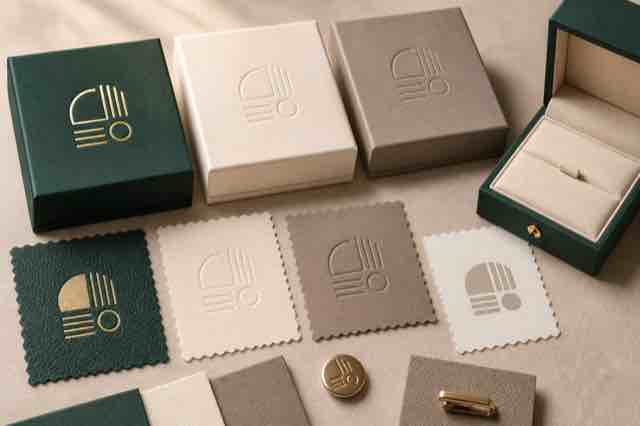
A logo finish should reproduce the artwork clearly on the chosen surface and remain consistent across the intended packaging range.
Plan the outcome before choosing details
Custom packaging decisions are easier to compare when the intended result is explicit: what the packaging must hold, where it will be used, how it should feel at the target price position and which details must remain consistent in bulk production. This turns visual references into a practical development brief.
Foil stamping
Metallic or pigmented foil can create crisp contrast when the artwork, pressure and surface are suitable.
Emboss and deboss
Raised or recessed details rely on depth, board construction and lighting rather than printed color.
Printing
Screen, pad and other confirmed printing methods can support fine color or fabric applications.
Applied details
Metal plates and separate details add dimension but require secure attachment and proportion checks.
Proofing
Confirm artwork size, position, finish color and tolerance on the actual packaging material.
Evaluation note: The best method depends on line weight, logo size, surface texture and desired contrast. A finish that looks strong on smooth paper may lose detail on velvet or coarse specialty paper.
Information that improves development accuracy
- Vector logo artwork
- Minimum line and text size
- Exact logo position and dimensions
- Approved finish color
- All packaging components that must match
A useful brief does not need every technical answer. It should explain the jewelry, target customer experience, quantity, destination and commercial constraints. Suitable structures and processes can then be compared, with important assumptions made visible before sample development.
What to approve on the sample
Appearance
Review color, surface, proportion, logo size and visible workmanship under normal use conditions.
Function
Install the actual jewelry, test opening and closing, and check protection, clearance and removal.
Production reference
Record dimensions, materials, finish, insert, accessories and packing requirements for bulk checks and reorders.
Connect development to the commercial order
Confirm the quantity by component, destination and required timing before finalizing the route. Structure, material use, finish complexity, individual protection and carton configuration can affect cost and shipping volume. For a multi-item program, align quantities and approval timing across components so boxes, pouches, cards and bags do not create mismatched inventory.
Questions to resolve before production
Can a digital mockup replace a physical sample?
A mockup is useful for direction, but a physical sample is the better reference for structure, touch, color, logo execution and jewelry fit.
How are changes after sampling handled?
Identify the exact changed detail and review its effect on cost, timing, construction and other components before approving a revised specification.
What helps repeat orders stay consistent?
Retain the approved sample and written specification, then review any proposed substrate, color, component or process change before a new run.