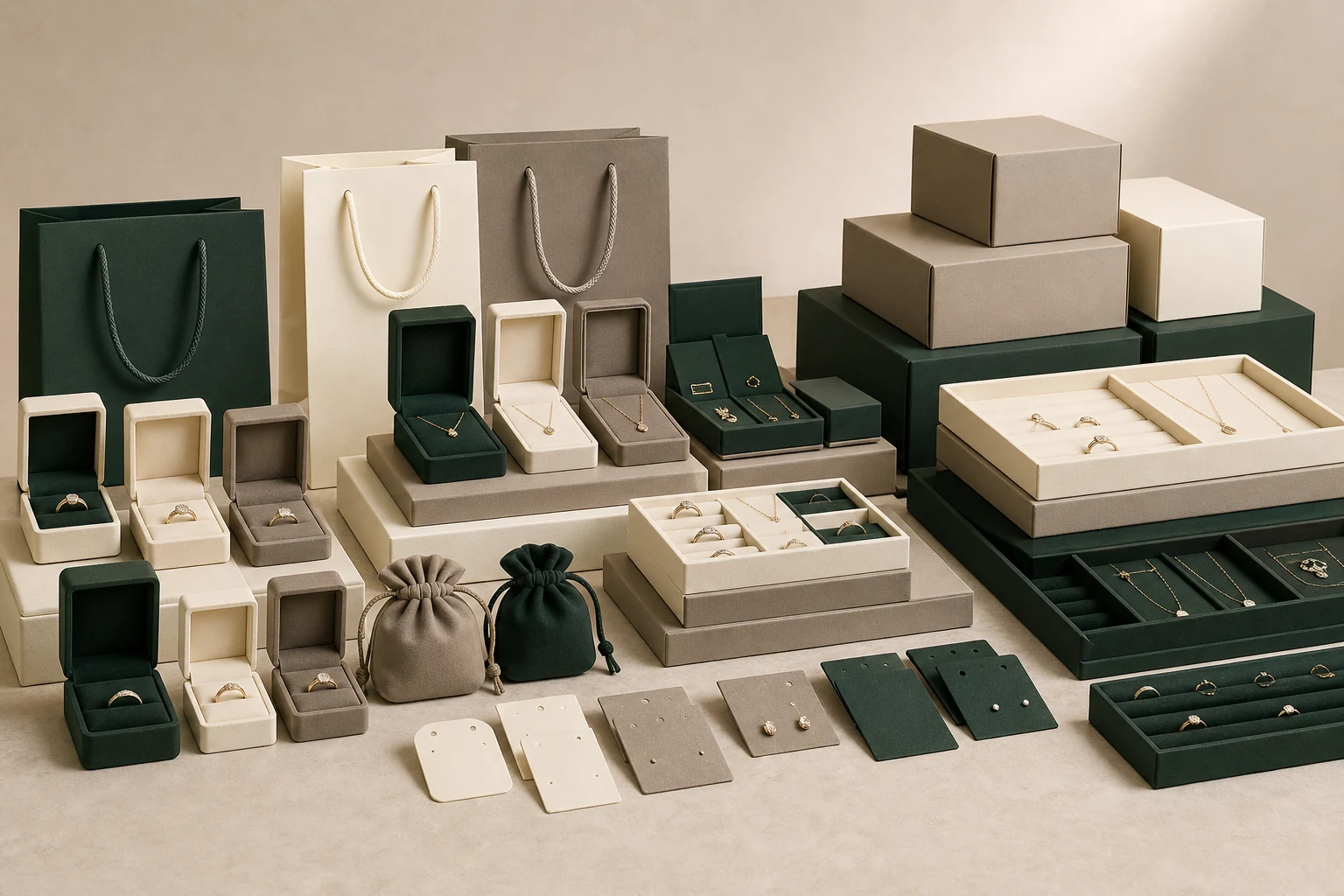
Retail packaging needs to work at the counter, in storage and across replenishment cycles while presenting one consistent brand.
Plan the outcome before choosing details
Custom packaging decisions are easier to compare when the intended result is explicit: what the packaging must hold, where it will be used, how it should feel at the target price position and which details must remain consistent in bulk production. This turns visual references into a practical development brief.
Store handling
Plan easy product insertion, customer presentation and storage for daily retail use.
Range consistency
Coordinate sizes and components through shared color, logo and material rules.
Display integration
Consider how boxes, pouches, trays and cards appear together in the retail environment.
Replenishment
Document each approved specification and align quantities across locations or programs.
Packing and labeling
Confirm carton, identification and destination requirements before production.
Evaluation note: Daily handling, storage, counter presentation and replenishment all affect the specification. Retail packaging must work for staff as well as for the final customer.
Information that improves development accuracy
- Store count and packaging use by location
- Core product sizes and forecast quantity
- Brand standards and approved colors
- Storage and handling requirements
- Replenishment and shipment plan
A useful brief does not need every technical answer. It should explain the jewelry, target customer experience, quantity, destination and commercial constraints. Suitable structures and processes can then be compared, with important assumptions made visible before sample development.
What to approve on the sample
Appearance
Review color, surface, proportion, logo size and visible workmanship under normal use conditions.
Function
Install the actual jewelry, test opening and closing, and check protection, clearance and removal.
Production reference
Record dimensions, materials, finish, insert, accessories and packing requirements for bulk checks and reorders.
Connect development to the commercial order
Confirm the quantity by component, destination and required timing before finalizing the route. Structure, material use, finish complexity, individual protection and carton configuration can affect cost and shipping volume. For a multi-item program, align quantities and approval timing across components so boxes, pouches, cards and bags do not create mismatched inventory.
Questions to resolve before production
Can a digital mockup replace a physical sample?
A mockup is useful for direction, but a physical sample is the better reference for structure, touch, color, logo execution and jewelry fit.
How are changes after sampling handled?
Identify the exact changed detail and review its effect on cost, timing, construction and other components before approving a revised specification.
What helps repeat orders stay consistent?
Retain the approved sample and written specification, then review any proposed substrate, color, component or process change before a new run.
Related packaging decisions
Review the package at the counter
Ask staff to pack a typical sale, a gift order and a multi-item purchase. Check where cards, receipts and accessories sit, how the package is handed over and whether the bag size works for the full combination. Review storage and replenishment as part of the same workflow.
Use clear component codes and photographs for routine packing. If several branches share the range, keep the approved versions and substitutions visible. A consistent appearance is easier to maintain when the packing method and component list are documented together.
For a structured brief, use the jewelry packaging RFQ checklist and list the decisions still to be confirmed.